

What is duty of care in aged care?
First published: November 2024
Duty of care in aged care is the legal and moral obligation and responsibility an aged care worker has, to ensure the physical and emotional safety of residents in their care. Alongside being legally and ethically sound, this encompasses providing a high-quality level of care that meets the clients needs, keeping in mind their right to choice. All clinical and non-clinical employees must work together to holistically provide a people-centred approach to care, which protects the vulnerable members of our society.
Where can I find the duty of care in aged care?
The aged care industry has multiple governing bodies overseeing the laws and regulations that affect the sector, one of which being the Code of Conduct for Aged Care set out by the Aged Care Quality and Safety Commission. This states how everyone that is part of the sector must behave and treat people receiving aged care.
The codes three aims are:
- To support a person’s right to personal choice, dignity and respect
- To promote kind, honest and respectful behaviour
- To keep people receiving aged care safe from harm
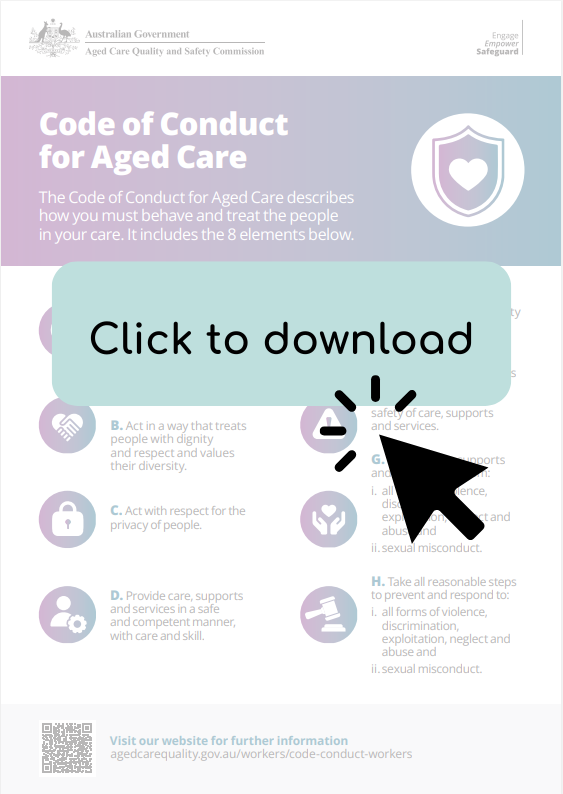
The eight elements of behaviour that apply to all aged care personnel are:
- Act with respect for people’s rights to freedom of expression, self-determination and decision making in accordance with applicable laws and conventions.
- Act in a way that treats people with dignity and respect, and values their diversity
- Act with respect for the privacy of people.
- Provide care, supports and services safely and competently, with care and skill.
- Act with integrity, honesty and transparency.
- Promptly take steps to raise and act on concerns about matters that may impact the quality and safety of care, support and services.
- Provide care, supports and services free from all forms of violence, discrimination, exploitation, neglect, abuse and sexual misconduct.
- Take all reasonable steps to prevent and respond to all forms of violence, discrimination, exploitation, neglect, abuse and sexual misconduct.
All aged care providers have an obligation to provide their employees with training on the duty of care. You can contact your union of governing body for more information.
What are my rights as a resident regarding the duty of care in aged care?
The Charter of Aged Care Rights applies to all who receive government subsidised aged care services. These 14 statements protect those in aged care, so they have a right to:
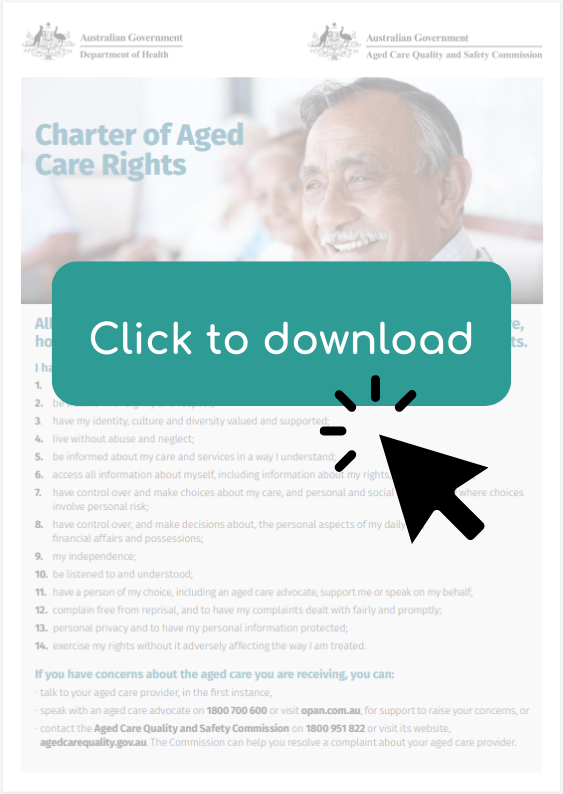
- Safe and high-quality care and services
- Be treated with dignity and respect
- Have my identity, culture and diversity valued and supported
- Live without abuse and neglect
- Be informed about my care and services in a way I understand
- Access all information about myself, including information about my rights, care and services
- Have control over and make choices about my care and personal and social life, including where the choices involve personal risk
- Have control over, and make decisions about, the personal aspects of my daily life, financial affairs and possessions
- My independence
- Be listened to and understood
- Have a person of my choice, including an aged care advocate, support me or speak on my behalf
- Complain free from reprisal and have my complaints dealt with fairly and promptly
- Personal privacy and to have my personal information protected
- Exercise my rights without it adversely affecting the way I am treated.
Click the images on the right for downloadable posters that you can hang in your home or workplace.
Examples of duty of care in residential aged care homes
Duty of care is upheld in aged care homes through everyday aged care worker duties and client to employee interactions.
Registered nurse care minutes
As part of the aged care reform roadmap care minutes (the amount of direct care time a resident has with an aged care worker) have increased from 200 to 215 per day between 2023 and 2024 to ensure each resident has enough clinical time for their needs to be met. This must include 44 minutes of direct care per day with a registered nurse, alongside a registered nurse needing to be on site 24/7.
A holistic approach to aged care
A resident’s care plan must not only meet their medical and physical needs but stimulate their interests and fulfill them emotionally. Aged care workers must know their residents inside out, from their background to their interests, hobbies, and family unit.
Listening to resident requests
Each aged care resident must be directly involved in their care. They have a right to know what is happening around them, and to make decisions that relate to their treatment and care plans.
Personal boundaries in aged care
Work role boundaries are put in place to protect not only the employee but also the resident. Sensitive and personal information is to remain confidential and disclosed with the relevant parties only.
Experienced and vetted aged care workers
Working in aged care requires the necessary clinical qualifications and knowledge paired with personal and social skills, and experience. Each aged care worker will undergo checks to ensure their background is clean and they are safe to work with vulnerable people.
How to ensure your aged care workers uphold the duty of care
As part of Sanctuary Recruitments thorough onboarding and compliance process, we ensure each aged care worker who is part of our casual nursing pool has the best intentions for the role they have applied for. Checks are done against their education, work experience and character to ensure we are providing the best nurses for the job.
To hear more about how our aged care recruitment services can benefit your home, or for your next aged care opportunity, contact our team below

Register with us
Looking for a new opportunity
in the aged care sector?

Expert staffing solutions
Need staffing support on a temporary, contract or permanent basis?