

Working in aged care in Australia
Revised February 2024
If you’re seeking a career that combines purpose, personal growth, and a sense of accomplishment, working in aged care may be the perfect choice. Becoming an aged care worker is a career choice fit for those who love to help others and give back to their community. Aged care is a sector that has attracted a lot of attention recently as its workers were on the receiving end of a 15% pay rise on top of a 5.75% wage increase that was implemented in July 2023.
The Department of Health and Aged Care is focusing on growing the workforce in Australia, with an aged care reform roadmap set in motion to increase job opportunities, develop current aged care workers skills and to support providers in managing their workers and culture. In this blog, we’ll explore the positions, rewards, and reasons as to why aged care could be the right job for you.
Why choose to work in aged care?
The elderly population is growing, as between now and 2042, the number of older people aged 85 and over is set to double. It is critical that the elderly generation now and in the future have enough aged care workers to support their needs fully and the workforce is being given a boost because of this.
Reasons why people like working in aged care:
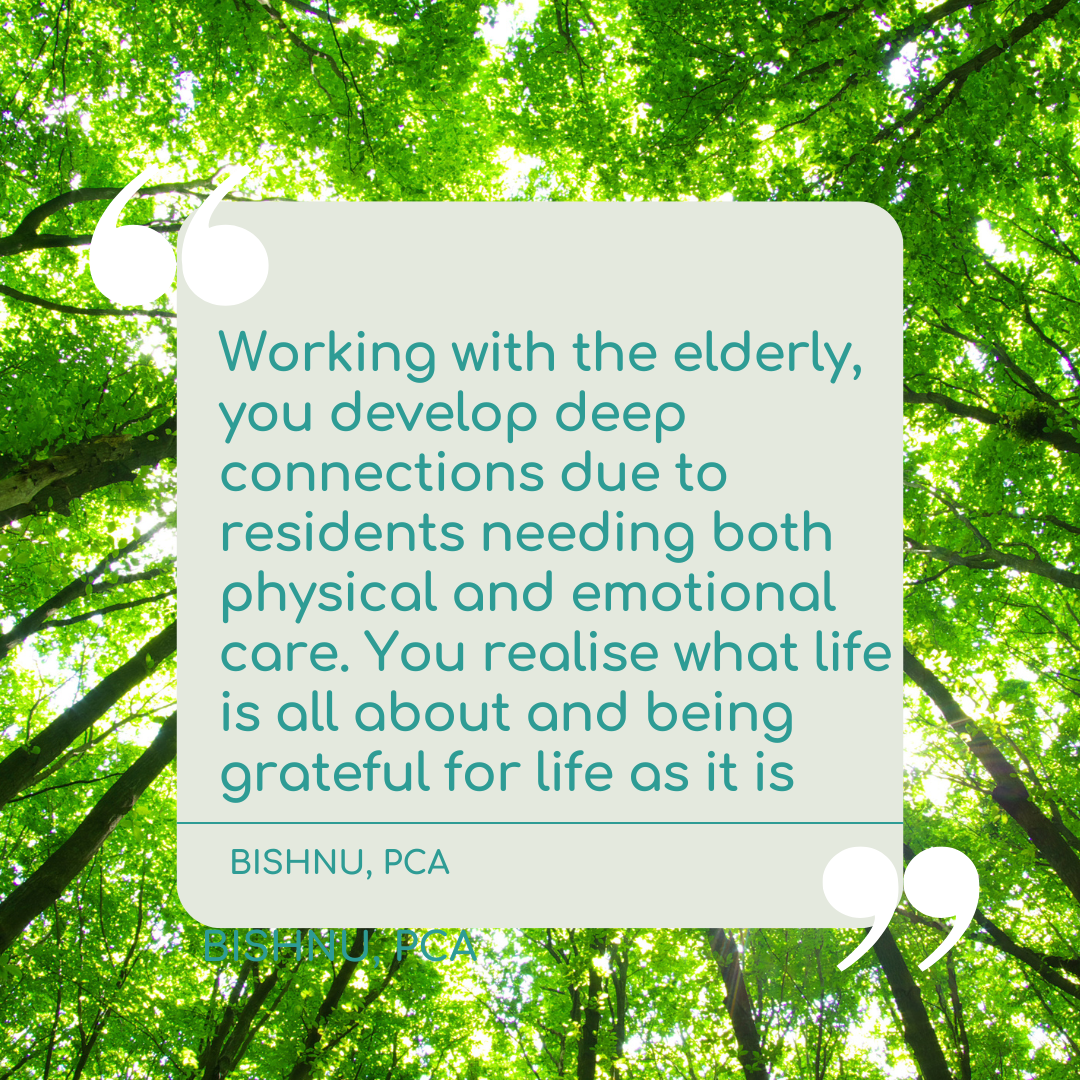
- The opportunity to make a meaningful impact on people’s lives. You play a vital role in improving the quality of life of elderly individuals by building deep and fulfilling relationships. These relationships can be a source of inspiration, support, and joy as you share life stories and experiences of those you care for. Small acts of kindness can have a meaningful effect on the residents and their families.
- Aged care is an extremely rewarding industry that contributes to your personal growth and development. Caring for the elderly requires patience, empathy, and great communication. You will learn to adapt to various situations, solve problems creatively, and develop a strong work ethic. Knowing that you are helping individuals maintain their dignity and independence during their later years means this is a career where every day you can see the positive impact of your efforts.
- Career development knows no bounds in aged care. You can enter the industry through a number of ways with little experience, and end up running your own aged care home. It is a vital and stable sector to work in.

Duties and responsibilities of an aged care worker
The day-to-day duties of an aged care worker depend on your specific role. Aged care is made up of clinical and non – clinical professionals, all assigned differing daily tasks.
Assistant in nursing/personal care worker
A care giver, which can be identified by various titles, is an entry level position for a clinical role in aged care. They work on the floor under the instruction of enrolled & registered nurses, and management, with tasks including:
- Assisting with Activities of Daily Living (ADLs) – personal hygiene, grooming, showering and toileting
- Helping with feeding rounds
- Dementia care
- Infection control
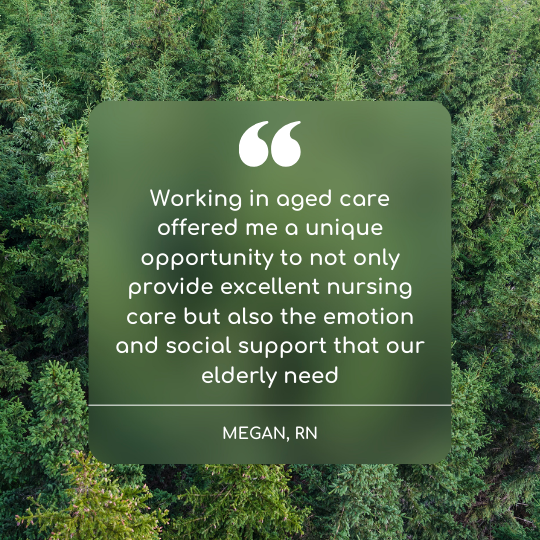
- Holistic care – providing emotional support to residents
- Providing companionship
- Administering medications (if you are a medication competent AIN)
Enrolled nurse
An enrolled nurse will have an AHPRA number, which means you will be a registered practitioner in Australia. They work under a registered nurse and provide patient care. Their duties include:
- Administering medications
- Supporting with ADLs
- Monitoring the physical and emotional well-being of residents
- Creation and upkeep of patient care plans
- Wound care
Their scope of practice is different to that of a registered nurse, as they carry out lower levels of patient care.
Registered nurse
Registered nurses are also registered practitioners and hold an AHPRA number. They carry out higher levels of patient care and are involved in leadership of the home, which includes managing residents and staff. Alongside the duties of an enrolled nurse, registered nurses will:
- Document effects of medications and make decisions on patient care
- Lead their team of nurses and care workers
- Work as in-charge of the home
- Coach staff
- Administer palliative care treatments and complex pain management
Clinical care coordinator
A registered nurse may advance into a clinical care coordinator position once more experienced. They work closely with other registered nurses and leadership team to:
- Support to the care team
- Liaise with other staff to develop residents care plans
- Advocate for residents and aid with mental and physical wellbeing
- Provide clinical leadership
This can be the stepping stone for a registered nurse to go into management.
Care and facility manager
Care and facility manager usually work in conjunction with each other. Care managers will be of a clinical background, whereas a facility manager may not be. Both of these are responsible for the upkeep of the home, the wellbeing of their residents and staff, and running the business. The care manager will be allocated duties such as:
- Monitor care staff to ensure Aged Care Quality Standards are met and delivered
- Oversee resident care and staff management of patients
- Manage family consultations and any grievances
- Ensure appropriate documentation is completed
- Advocate for resident wellbeing
- Support with accreditation and participate in ongoing reviews
Often, they need to demonstrate experience working as a registered nurse in aged care, usually within a senior RN role.
A facility manager can be of a clinical and non-clinical background (depending on individual home requirements) and would take the responsibility of:
- The accreditation process
- Financial reviews and budgeting in accordance with AN-ACC
- Home auditing
- Administration and documentation, with extensive reporting
- Performance reviews
- Full operational management of the home
Education and quality manager
Duties for an education and quality manager role usually encompasses:
- Monitoring of the accreditation standards and Aged Care Act to ensure policies are fully implemented
- Risk assessments
- Education for all staff to ensure standards are upheld
- Review of policies and procedures and implementation of new ones
- Ensuring all homes under their management meet the benchmark of excellence
Recreational activities officer/leisure and lifestyle officer
Non-clinical members of the team may be in involved in areas of the home that focuses on:
- Engagement and participation of the residents via social, recreational and cultural activities
- Mental health and wellbeing programs
- Conducting assessments on residents
- Work with staff and family members in identifying individual resident recreation needs
Aged care opportunities available with Sanctuary Recruitment
Working in aged care is a career choice that not only benefits the elderly but also offers numerous rewards and opportunities for personal and professional growth. The demand for compassionate and dedicated individuals in this field is rising, with there being so many ways you can enter the industry at entry level. It is the perfect job for you to find meaning, purpose, and fulfilment in your work. Do you think you have what it takes to work in an aged care team? Use our aged care resume template to build your resume and apply today.
We are hiring on a permanent, temporary, and casual contract basis. For a free resume assessment and to find out more about what service we provide, please submit your interest below.

Register with us
Looking for a new opportunity
in the aged care sector?

Expert staffing solutions
Need staffing support on a temporary, contract or permanent basis?