

Standard 6: why food and nutrition matter more than ever in aged care
By Rhiannon Dhoot, Client Relationship Manager at Sanctuary Recruitment
I’m Rhiannon, Client Relationship Manager at Sanctuary Recruitment. Over the past few months, I’ve had the opportunity to meet with aged care providers across Australia, visit a range of homes and learn more about the challenges and priorities shaping the sector today.
One topic that has stood out to me is the growing focus on food, dining and hospitality services within aged care.
When I first started speaking with providers, I was often surprised by how many were unaware that Sanctuary supports hospitality recruitment alongside nursing and care staffing. However, once the conversation turned to food, dining experiences and the increasing importance of Standard 6: Food and Nutrition, it became clear why hospitality teams are becoming such an important focus for many organisations.
Food has always played an important role in aged care, but with the strengthened Quality Standards, providers are placing even greater emphasis on the dining experience and resident wellbeing.
Why Standard 6 matters
Following the Royal Commission into Aged Care Quality and Safety, concerns were raised about the quality, variety and nutritional value of food being served in some residential aged care homes. In response, the Australian Government introduced Standard 6: Food and Nutrition as part of the strengthened Aged Care Quality Standards, recognising the important role food plays in delivering high-quality care.
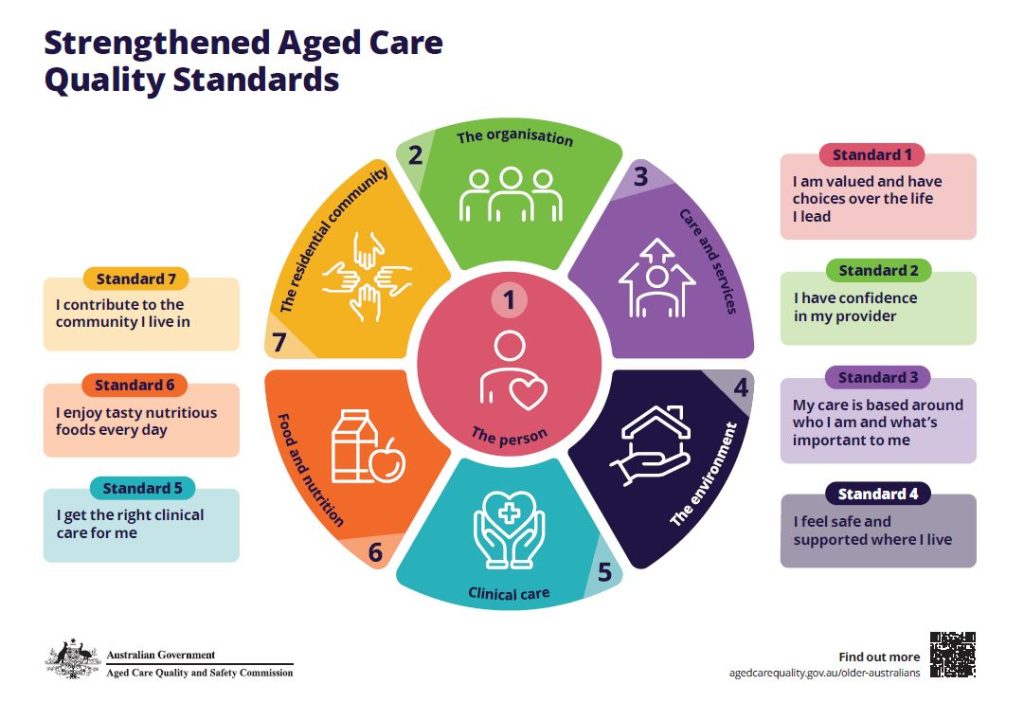
For many older people, mealtimes are one of the highlights of the day. They provide an opportunity to enjoy good food, connect with others and experience a sense of comfort and familiarity. Standard 6 recognises that food is about much more than nutrition alone. It places greater emphasis on the overall dining experience and acknowledges that food and nutrition have a direct impact on health, independence, dignity and wellbeing.
To meet the standard, providers need to demonstrate that residents:
- Are offered meaningful choice around meals and dining experiences
- Have their preferences understood and respected
- Receive appropriate nutrition and hydration to support their individual needs
At its core, Standard 6 is about ensuring residents have a positive dining experience that reflects their individual needs, preferences and lifestyle.
Seeing the focus on food first-hand
As I’ve spent time meeting with providers and visiting homes, it’s been interesting to see how different organisations are responding to this increased focus on food and nutrition.
One provider I recently met with spoke about bringing greater oversight to the recruitment of hospitality staff, recognising the important role kitchen and dining teams play in resident outcomes and overall service quality.
Another example came during a recent visit to several South Coast aged care homes operating under a household living model.
What immediately stood out was how homely the environment felt. Residents were encouraged to be involved in everyday activities, including aspects of meal preparation and table setting. During our visit, we saw residents actively participating and genuinely enjoying being part of the process.
We also had the opportunity to speak with some of the residents, who spoke positively about the household living model and the sense of community it created.
It was a powerful reminder that food is not simply something that is delivered to residents throughout the day. It can be an important part of maintaining independence, encouraging social connection and helping people feel at home.
Why hospitality teams matter
Meeting the expectations of Standard 6 relies heavily on having the right people in place.
Experienced chefs, cooks, kitchen hands and food service assistants do much more than prepare meals. They help:
- Support resident wellbeing
- Meet individual dietary requirements
- Create positive dining experiences that residents look forward to each day
As providers continue to strengthen their focus on food and nutrition, hospitality professionals are increasingly recognised as a valuable part of the broader care team.
Investing in the people behind the meals
Food has always been an important part of aged care, but Standard 6 has brought renewed focus to the role it plays in health, wellbeing and quality of life.
Whether it’s through greater oversight of hospitality recruitment, innovative household living models or a stronger focus on resident choice and dining experiences, providers are continuing to invest in the people behind the meals.
At Sanctuary Recruitment, we’re proud to support aged care providers with experienced hospitality professionals who understand the unique demands of residential aged care and the important role they play in delivering positive outcomes for residents.
Get in touch
If you’d like to discuss hospitality recruitment, workforce planning, or how Sanctuary can support your aged care team, I’d be happy to chat.
Rhiannon Dhoot
Client Relationship Manager | Sanctuary Recruitment
📧 rhiannon.dhoot@sanctuaryrecruitment.com
📱 +61 485 972 926

Register with us
Looking for a new opportunity
in the aged care sector?

Expert staffing solutions
Need staffing support on a temporary, contract or permanent basis?