

2024 flu vaccination requirements in aged care in Australia
First published: July 2024
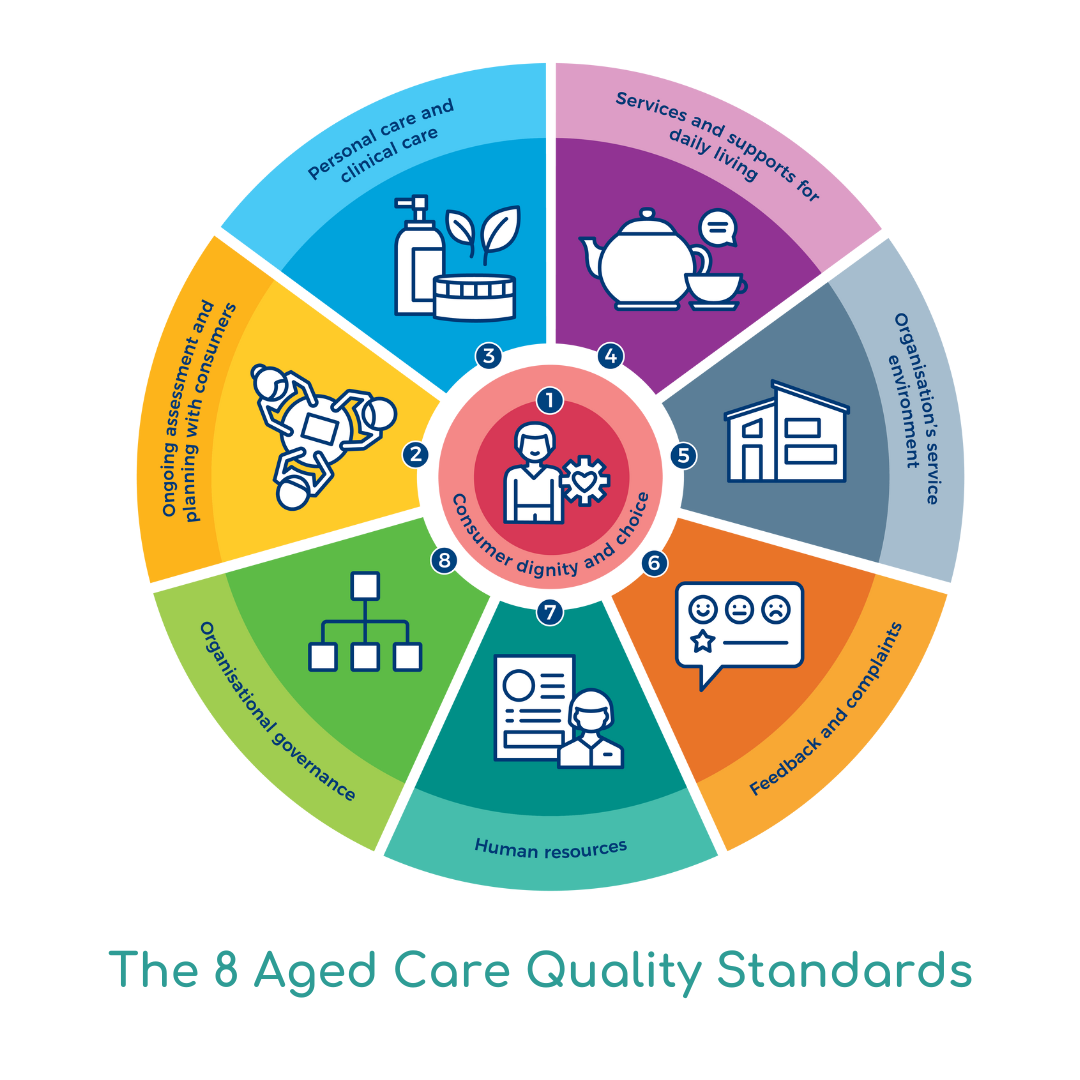
The Aged Care Quality Standards states that for the purpose of infection control, aged care providers and relevant organisations should promote the benefits of the influenza and coronavirus vaccinations for both their residents and staff. These vaccinations are to be renewed annually, adapting to each new strain of influenza.
Key aims of administering influenza vaccinations are:
- Reduce the impact of flu in the community
- Control the spread of the virus, especially within an environment with members of the community that are of an increased risk.
- Minimise the risks associated with contracting the virus, for example pneumonia
2024 influenza vaccination requirements vary depending on your job description, working environment and location.
Influenza vaccinations for aged care workers
According to the Quality of Care Principles 2014 and the Records Principle 2014, aged care providers across the country are required to:
- Keep records, for each calendar year, of each service staffs vaccination received dates
- Provide staff with access to free annual influenza vaccinations
- Promote the benefits of receiving flu vaccinations
Healthcare worker categories
There are three categories of healthcare workers in Australia: A, B and C.
Category A
- Healthcare workers who have direct physical contact with patients, body substances or infectious material
Category B
- Healthcare workers who have rare/limited physical contact with patients, substances or equipment that might be infectious
Category C
- Healthcare workers whose role doesn’t require them to have physical contact with any patients, body substances or equipment
Each individual state of Australia governs there own influenza requirements.
State influenza vaccination requirements
Australian Capital Territory (ACT), Queensland (QLD), Tasmania (TAS) and Western Australia (WA)
The vaccination is strong recommended for all healthcare and aged care workers. This includes direct and indirect members of staff. This is to minimise the spread of flu from staff to residents/patients.
In 2024 all residents from Queensland and Western Australia over the age of six months can receive a free flu vaccination.
For Queensland, this is funded by the government as part of the 2024 Free Influenza Vaccination Program, and concludes on the 30th September 2024.
For Western Australia, you can receive the free vaccination during May and June, and may come with an appointment fee.
New South Wales (NSW)
Within residential aged care, the flu vaccine is strongly recommended for all aged care staff. This encompasses both direct and indirect aged care workers, and any visiting volunteers or agency staff. It is mandatory for all Category A healthcare workers to receive their vaccination by the 1st June every year. This is inclusive of public and private hospitals, licensed private health facilities.
Northern Territory (NT)
Is it strongly recommended for all aged care workers to receive the influenza vaccination.
Victoria (VIC)
Category A and B healthcare workers are required to renew their vaccination annually by the 15th August. This applied to hospital and aged care staff, as well as those working within ambulance and patient transport services, and Forensicare (mental health services).
This can be waivered if the worker holds a valid medical exemption/contradiction. Evidence of this must be shown to their employer.
Working in Indigenous communities
All healthcare workers in remote Indigenous communities are strong recommended to receive the influenza vaccination.
Presenting your Immunisation History Statement (IHS) to your employer
Through linking your Medicare to your myGov account, you can download your IHS through this account or through the Express Plus Medicare mobile app. If you aren’t eligible for Medicare, you can still get your statement online through your myGov account. You will need an Individual Healthcare Identifier (IHI) to get proof of this, which you get automatically through Medicare, or you can apply for one separately.
Part of our onboarding and compliance process involves showing proof of your influenza and Covid-19 vaccinations. For more information on registering with Sanctuary and what you need to be eligible to be part of our nursing team, contact us today:

Register with us
Looking for a new opportunity
in the aged care sector?

Expert staffing solutions
Need staffing support on a temporary, contract or permanent basis?